You’d think that the centre of village life at Cropredy would be the annual folk festival, hosted by the band Fairport Convention, or the fourteenth century church, for which the band raised the funds for two new bells. Or perhaps it would be one of the two pubs, The Brasenose Arms, or The Red Lion?
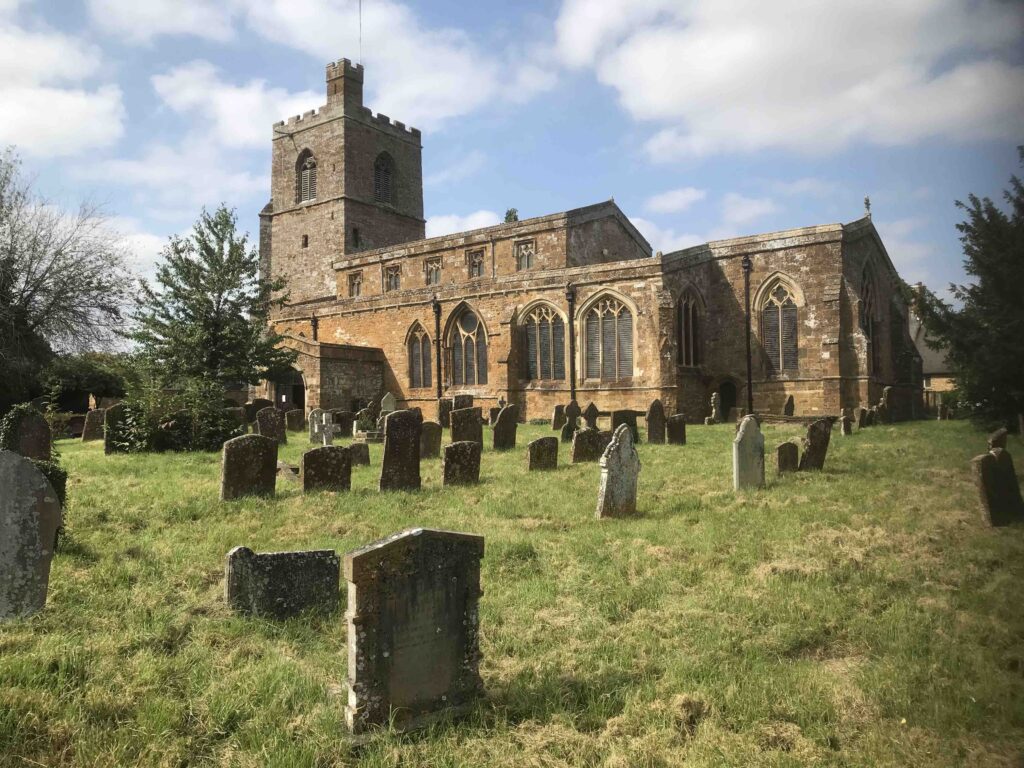
But no, at the centre of village life is the canoe club. Every evening the villagers leave their thatched cottages, head down to the club, and paddle south along the canal.
During the day, the canal is left to the wasps, spiders, daddy long legs, swans, ducks, herons, and a few unlucky fish.
The village is a popular mooring spot, with stays limited to forty-eight hours, so I moored fifteen-minutes’ walk south. Returning to my boat one evening, I found a hire boat moored bow to bow. Chatting over a beer with the occupants, Steve and Leslie, I learned that they were retired teachers from Bradford on Avon.
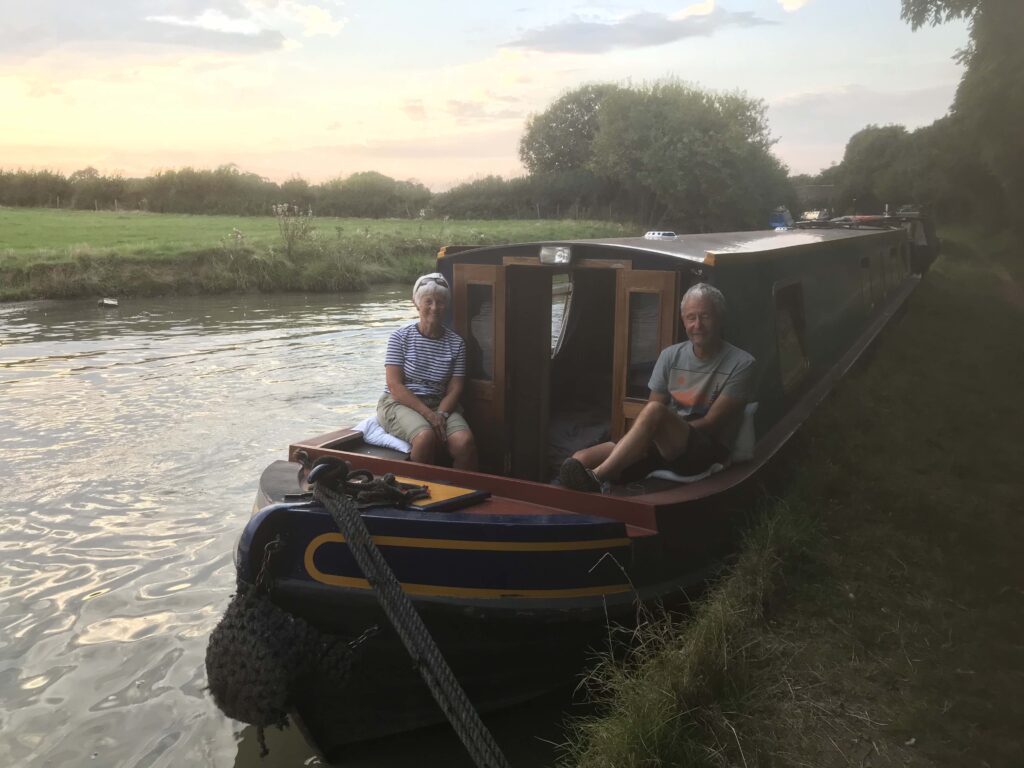
Having retired, they had taken up a Voluntary Service Overseas (VSO) post as teacher advisors in Rwanda where they were transported around to schools in the mountains on the pillion seat of a motorbike.
Their posting took place after the civil war, in which up to a million Tutsi and Hutu were killed in tribal fighting. They felt that the current relations between the Hutus and Tutsis were about as good as one could hope for in the circumstances, but as outsiders, it wasn’t possible to know what tensions lay below the surface.
I told them about my own VSO posting in Bangladesh, which began in 1989. Bangladesh had also recently endured a civil war, becoming independent from Pakistan in the process. Estimates of the number of people who died in it vary from three hundred thousand to three million.
My job-title was as a “Documentation Advisor”. I was located in the capital Dhaka. The first three months consisted of an induction period, in which about three other new arrivals and I had Bangla language lessons, visited various institutions in Dhaka, and a village in the countryside. We then moved onto our host organisations. In my case, this was a library that sent people out into the villages with travelling exhibitions, books and talks.
The usual way of getting around Dhaka was by cycle rickshaw. They were cheap, ubiquitous, and had a canvas-covered-frame that acted both as a rain-cover, and sun-shade, for the passengers.
There were around one hundred thousand rickshaws in Dhaka at that time. Most riders didn’t own the rickshaw, they had to work the first couple of hours each day to pay the rent on it.
When I first arrived, I tried hiring them once or twice, but having a malnourished Bangladeshi, half my weight, strain at the pedals to drag me along, seemed to hark back the Raj. The alternative was a baby taxi (Tuk-Tuk), but they were expensive on a VSO’s salary, as was the purchase of a second bicycle, my first had been stolen, so I walked.
One day, I was in the company of a French volunteer who needed to travel a couple of miles across town. He hailed a rickshaw. I didn’t have the energy to argue, as I wasn’t sure of my moral ground. My policy was depriving the riders of the fares they needed to survive.
So now there were two large westerners, squeezed into a double seat designed for Bangladeshi-sized pelvises, being towed along by one Bangladeshi. There were plenty of things to distract one on the streets of Dhaka. The ox-drawn carts, half a dozen leprosy sufferers, rolling over in the dust, in time to their chant, and the reedy notes of a gourd instrument, a sudden horn-blast from a yellow truck carving its way through the melee.
Even with all this distraction, I’m still surprised it took me a couple of hundred yards to notice that our rider only had one leg. The other, dangling as a counterweight. I called proceedings to a halt and paid the driver the full fare. I thought he would see this as a positive outcome, but he seemed displeased. I had probably insulted his professional pride.
On one of my earlier rickshaw rides, I had switched roles with the driver. I was in my late twenties and reasonably fit, and only had to pull the weight of one small Bangladeshi, but on the rough dirt roads, with the heavy bike, and in the intense heat and humidity, I was dripping with sweat and unable to continue after just a few hundred yards.
Earning a living as a one-legged rickshaw driver has since struck me to be an activity that must be at the very limit of human capability. I read that the life expectancy of a rickshaw rider, from the time at which they start, is ten years.
I doubt that my host organisation benefited much from my advice, but a fellow volunteer was a nurse who taught at a hospital, and another was an engineer who travelled the country teaching people how to install and maintain fresh-water pumps, so those postings at least, probably benefitted our hosts.
With regard to war, and the risk of it impinging on a serene chug along the waterways, there are occasional reminders that it can come calling, very close to home. The Battle of Cropredy Bridge, was a skirmish fought in 1644 during the English Civil War.
