Last autumn, the only marina within a twenty-mile radius of central Liverpool, in the northern sector, with available moorings, was Scarisbrick Marina, so that is where I spent the last winter.
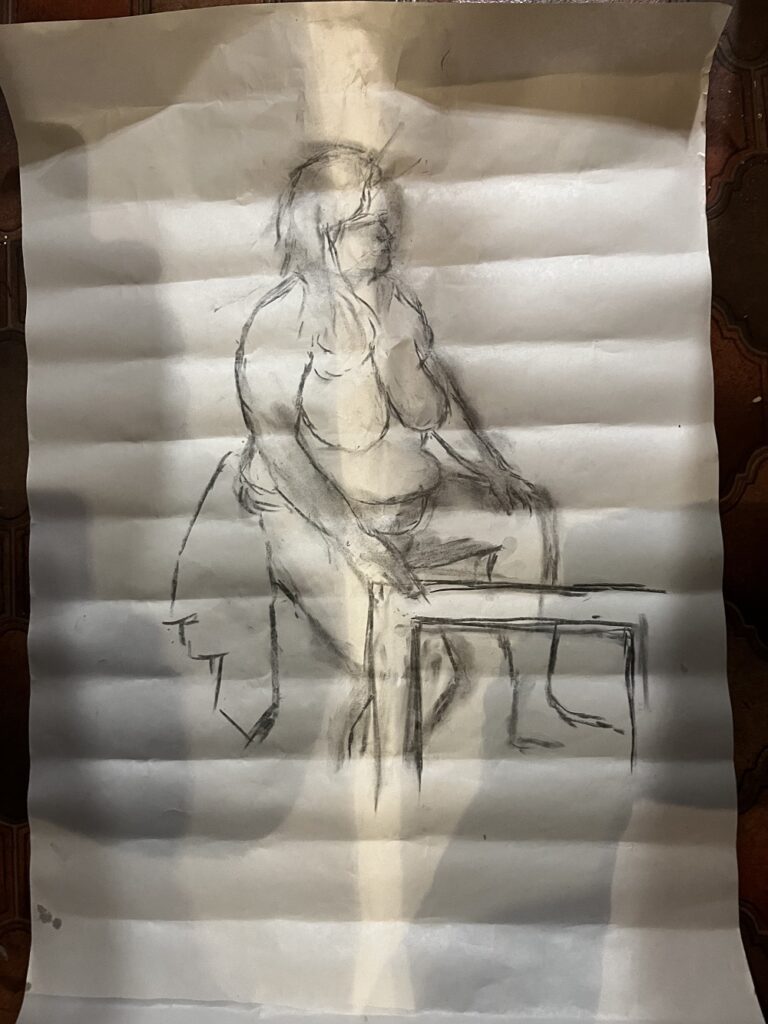
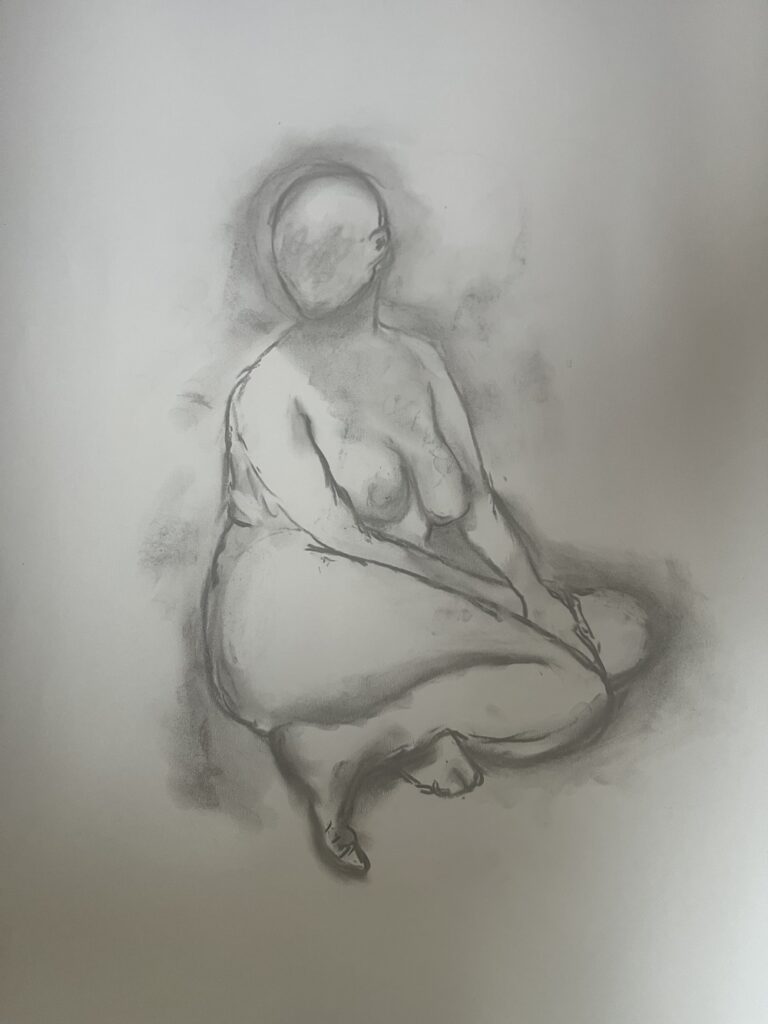
Googling the options for a creative diversion, I came upon the ArtsLoft in Southport, which offered life drawing and pottery classes. A Thursday routine evolved in which I would catch the bus into town, walk to the seafront, enjoy the breeze, stop off at a café to consume a bacon barm (as baps are called in these parts) and coffee, before continuing on to my pottery class. The life drawing classes were in the evening and the models were asked to maintain each pose for between five and twenty minutes.
About six weeks in, I arrived at the café early, and an hour later, to justify my continued occupation of the table, I ordered a pot of tea, and when it arrived I began to take an interest in the pot’s design. It occurred to me that I could make one in that afternoon’s class.

Sam, the class tutor (who looks a bit like Kevin Rowland of Dexys Midnight Runners), began sketching out the structural requirements on a blackboard. He advised me to make two pots, to increase the chances of one of them making it through to completion.

My only previous experience of pottery had been a “taster session” on a work’s “Team Building Day”, a few months earlier which explains the variation in shape of the two main vessels after I’d thrown them on a potter’s wheel.
The components were left for a week to harden to a leathery consistency so that they could be trimmed. The video clip above shows my attempts at trimming the knob of one of the lids.
In this task, I was hampered by the fact that the knob had a different vertical axis from the base of the lid, due to my limited throwing technique. There should be no wobbling of the trimming tool. My excuse for that is that I was holding my phone in my left hand, in order to take the clip, and so couldn’t use that hand to steady my right hand.

Holes were drilled into the wall of the main vessel to allow the tea to pour into the spout. The spout is cut on a diagonal, using a wire, so that it can be attached to the vessel. Hatched lines are scored into the clay and slip (liquid clay) is applied between the two components to ensure a seal.

I opted for the most basic handle-making method which involved the use of a rolling pin and a knife to create the handle-strips. More scoring and slip was required to apply them to the main vessel.

I’d decided on a prehistoric theme for decoration, so the Uffington White Horse was etched into the side of one of the pots. For the other pot, I went for a circle motif based on an ancient Chinese design that I’d seen on a bowl.
However, you are always up against the clock in a pottery class, and having got as far as inscribing the circles within circles, I realised that I wouldn’t have time to gouge out the areas around the small circles to give the desired 3D effect. Instead, to provide a similar outcome, I decided to add a hub at the centre of each pair of concentric circles.
A moment after applying the first hub I noticed an echo of this shape in the lid of the pot, and realised that my conscious mind was perhaps only just catching up with my subconscious. I summoned up the courage to ask Alice, the tutor on that particular day, if she thought my design met with ArtsLoft’s acceptability standards. She gave it her approval and so both pots were able to proceed to the bisque firing stage.

The pots were heated up in the kiln to 980 degrees Celsius. They emerged a powdery white colour, ten percent smaller, and porous, so still able to absorb the one or two layers of glaze that could be applied. There was a small crack in the interior of one of the lids but it was not structurally significant.

Prior to dipping them in the buckets of glaze, the circular footers had to be painted with wax resist to prevent the glaze from adhering to those areas. Otherwise, the glaze on them would stick the pots to the kiln shelves as it melted and reset. Any areas of decoration that had to remain as bare clay were also painted with the wax resist, such as the Uffington White Horse.

The pots emerged from the 1240-degree glaze firing process in a vitrified state, so no longer porous, and now able to contain fluids at a range of temperatures. The heat modifies the chemical composition of the glazes, changing them from dull to vibrant hues. The white horse pot had a marble green glaze applied on top of a marble blue glaze, the other, a white glaze on top of a bright red-orange glaze.
Sam’s advice that I should make two pots in the hope of getting one over the finishing line had proved prescient because it was evident that I had dipped the white horse pot in the glaze for too many seconds.
This had resulted in a glaze-thickness that meant the lid no longer fitted, and all the holes drilled through the side of the pot, to let the tea into the spout, had sealed over, and the white horse had come out looking more like a plesiosaur than a horse.
So, the white horse pot is now only fit for being a repository of tea bags, or a flower pot, unless I decide to get brave with a Dremel drill and grinder. It is all part of the learning process though, and the other pot pours well enough.

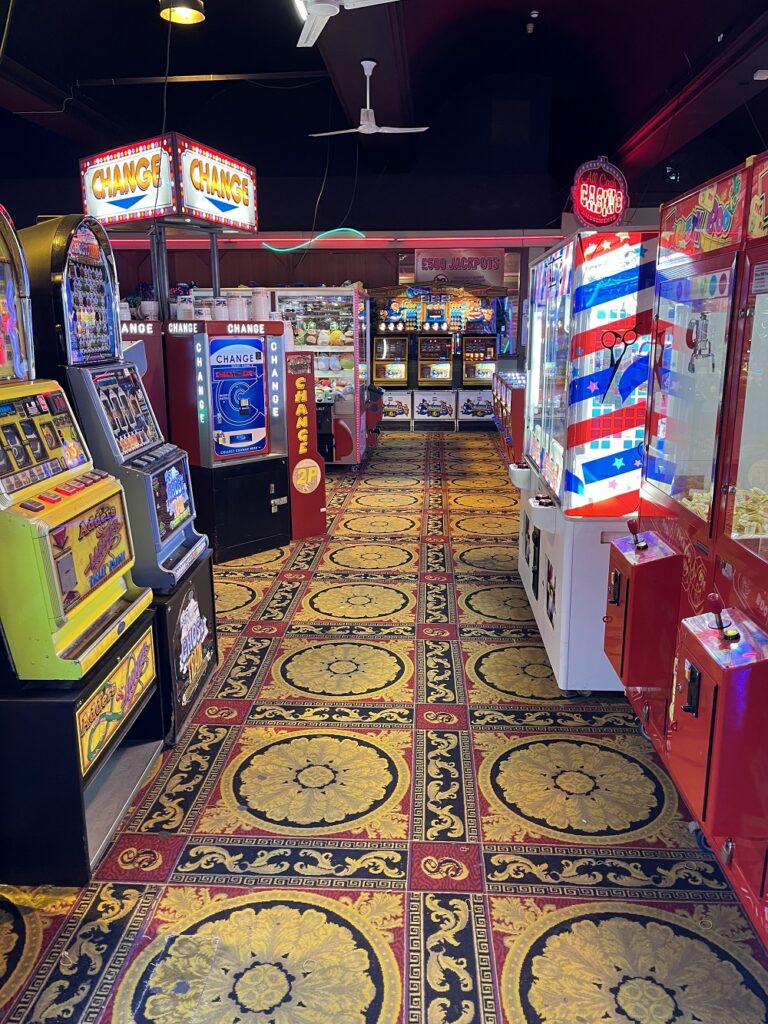
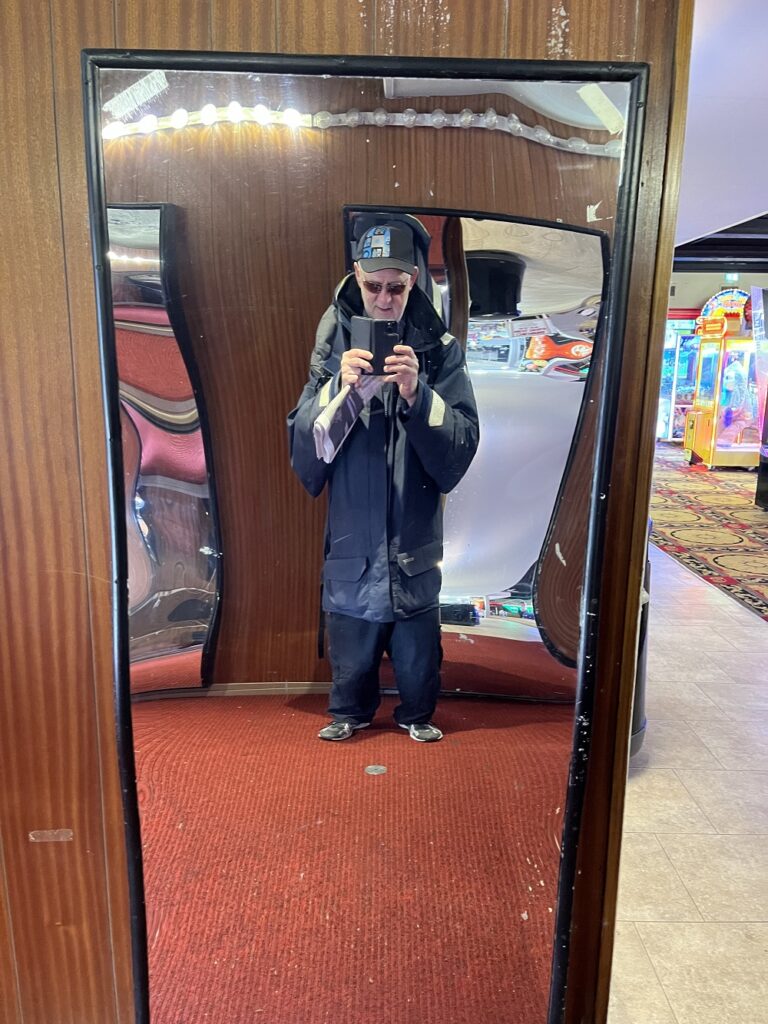
And so, an enjoyable stay in the Scarisbrick/Southport area has come to a close. It is goodbye to the Victorian arcades, the amusement arcades, the fun park, the hall of mirrors, and the generous sharing of skills by the tutors and classmates at the ArtsLoft (in particular Sam, Alice, Arthur, Dawn, and Vinny), plus the admirable patience of the models.